I can’t think of a better July 4th message than this, originally posted July 1 on the Chronicle of Higher Ed’s Brainstorm group blog. Here’s to all the trustees, administrators & legislators that made this message possible.
A couple of days ago, I posted a link to the Living Wage Calculator, and casually & rhetorically — but not accurately — said that you could use it to calculate eligibility for food stamps.
That’s because in order to actually keep writing, instead of simply howling my outrage, I have a flip tendency to handle rhetorically, ironically, and sarcastically the actual, bitter experience of faculty, students, and staff cheerfully exploited by half-million-dollar-a-year pigs at the trough and their cronies in the trustees’ skybox.
Food stamps are a federal program, administered by individual states. There are generally eligibility calculators made available by the relevant agencies in each state, such as this one in Oregon.
If you are eligible for food stamps in your state, you may also be eligible for emergency food assistance at a food bank and, if you are pregnant or have young children the WIC supplemental nutrition program.
Make sure you let your local newspapers know that you’re a campus employee and, if you have the time, mention what your top administrators earn and how much they spent on bricks & mortar, such as business centers and sports facilities in the past couple of decades.
Millions of Americans, many of them enrolled in or employed by higher education, are receiving food assistance, and with the rising cost of transporting oneself to multiple part-time jobs (yep, it costs more to be poor — just ask your administrator with a vehicle allowance), millions more are enrolling.
Millions of others are supplementing their loans with family assistance and credit card debt.
Nope, no problems here.
At least none that the god Market can’t fix.
Oh, and USC? (You know which one I mean by now.) I’ll catch you next week.
Use this living wage calculator to find out who’s eligible for food stamps at your school.
Before I get to the proper business of this post, here’s something that really deserves a post of its own, but I know I’ll neglect if I don’t just link to it now.
This just in from Jon Curtiss of the essential CGEU (Coalition of Graduate Employee Unions) discussion list, which I think all graduate students should join.
Jon urges all graduate employee organizers and associations to make use of the living wage calculator produced by Penn State’s Amy K. Glasmeier, as part of the Poverty in America project.
The calculator is organized by state, county, and municipality across the United States, with typical wages for many occupations listed.
Use it to find out who’s eligible for food stamps on your campus–graduate employees, contingent faculty, gardeners, undergraduate carpenters, outsourced restaurant and cleaning staff are a good place to start.
Then, just for kicks, compare their sub-poverty wages against the salaries of the deans, president, and provost–plus the associate deans, associate provosts, financial staff, and business/law/medical school faculty.
When you’ve tabulated the results for your campus, go ahead and tell me education is rendering class struggle obsolete in the United States.
As a preview of the postponed entry on the University of South Carolina, check the data for Richland County, where that campus is based. Not too many of the grads are making anywhere near a living wage. Many don’t earn half the living wage (and it’s pretty freaking low.)
Oh, and I learned today that South Carolina grad students don’t like to be described as attending the “other USC,” and that some of them think I’m sometimes not very nice to administrators.
Yes, doubtless the kind, gentle administration will have a nice conversation with you and say, “Gosh, fellas, we didn’t notice how little we were paying you. Here, let’s rectify that promptly. We’ll double what you’re making. Would you like us to backdate that to the date of your matriculation?”
Here’s an alternate title. Join us at the University of South Carolina–Where You Have the Right to Work, But Not the Right to Eat.
A point of information: the most pompous of the faculty I used to work with, and that’s saying quite a bit, in a right-to-work state, used to wander around ignorantly harumphing to any grad student that would listen that “unions were illegal” in the state. Not true. Certain rights associated with strong unionism might be curtailed in those states, but unions aren’t “illegal.”
In fact, in nearly all right to work states, many groups–police officers, municipal workers, community college teachers, schoolteachers–form associations that may not have collective bargaining rights, but which still have a powerful influence on wages and working conditions.
Historically, the most unionized group of U.S. employees today–public employees–had to act in organized fashion to change laws that made their self-organization illegal or ineffective. Martin Luther King was shot while supporting an “illegal” strike for recognition of their union by municipal sanitation workers in Memphis.
Of course, I’m sure we’re all ever so much smarter than sanitation workers.
Oh. Wait. They get paid more. And have better retirement plans.
Oops, so do police officers. And firefighters. And municipal employees.
Huh. What do they know that we eggheads don’t know?
This begins an occasional series. Tomorrow’s post will feature The Other USC: Graduate Students on Food Stamps in South Carolina.
Thomas Boyd, In Time of Peace (1935). “Hicks’s voice was sharp as he swung around. ‘Except when I was in the army, people have tried to make me feel like that all of my life–that, if things went wrong, it wasn’t that there was something the matter with the system, but that there was something the matter with me. Well, I don’t fall for it any more. And I don’t want you to think that I’m just going to lie down and take it, either, because I’m not.’”
Veteran Hicks returns to a job at a metal lathe, acquiring conciousness of his expendability. Becomes a reporter for the labor newspaper. Disillusioned by opportunistic labor bureaucrats, joins a liberal tabloid and marries. Buys a home on rent-to-own terms. Begins an affair with a woman of the leisure class. Wife becomes an advertising writer, and they hire a nanny. Through his lover’s connections, he writes a lucrative column pimping a radio company. They build a nicer home, keeping the first as an investment. “Everyone” is making money in the stock market. Mortgage crisis and depression ensue. Their wages are cut and their home is repossessed. Hicks repudiates professional-managerial opportunism:
“I’m just not going to kid myself any more. Im sick of being jerked around like a monkey on a stick, dancin’ around on top of the workers’ shoulders till the shakedown comes and then trying to scramble up again. That’s what your father’s been doing all his life–and look at him! That’s what we’ll be doing, too, till we wake up and realize that the only way we’ll ever get anywhere is with the workers.”
Albert Maltz, The Underground Stream: An Historical Novel of a Moment in the American Winter (1940). A communist union organizer, an auto plant personnel manager, and a small businessman at the head of fascist cell meet fatefully over a three-day period in February 1936. Auto is not yet unionized, membership in the Communist Party is not illegal, and fascist terror is on the rise.
“‘…We know the power of capitalism in this country. When it comes to a test, the progressive forces in this country are going to be smashed. The trade union movement will be smashed. And the Communist Party will be smashed first of all, to pave way for the others.’
‘I don’t think so.’
‘Man, be serious! You don’t have to keep up face for me. I’m not someone you need to convert.’
Princey shrugged.
‘Fascism will take power here, and you know it.’
With no idea where this conversation was leading, he asked, ‘Suppose it does?’
Grebb reacted with astonishment. ‘Can a Communist ask that so casually? You know what it will mean: Generations of suffering, increasingly lower standards of living for the mass of people, a bleeding country, a stifled science, an idiotic art–finance and gangsterism in the saddle!’
‘Well?’ Princey managed.
‘I know the way to overthrow Fascism quickly!’
‘How?’
‘By working inside it! Listen to me, Princey. I beg you to listen seriously. This is a tragic time for the world. Those who hold back from new political paths will be judged by history to be as guilty as those who openly opposed the working-class movement. …It would have been so easy for me to leave my job, to denounce finance capital, to give every cent of money I have to the Communist Party. That’s what I should have liked to do. The harder thing is what I’ve decided to do: To remain within the ranks of capital. To gain power in the growing Fascist movement! …Then, when the time is ripe, you and I will be in command. We’ll be able to act for Socialism from within the camp of its enemies.‘”
In the next installment of this series I’ll feature Upton Sinclair, The Industrial Republic: A Study of the America of Ten Years Hence. (1907), including Sinclair on Brooks Adams’s The New Empire. Adams: “Institutions are good when they lead to success in competition, and bad when they hinder.”
So yesterday I suggested that some other person take up a camera and assist the trustees to introduce themselves.But then I thought, why wait?
These clever, selfless folks have overseen the vicious gutting of the faculty–earnestly saving on our wages and benefits (”$1000 a class–what great managers we are! maybe next year we can get it down to $950! oh boy!”) in order to build themselves business centers, business colleges, and sky boxes. Being such wizards of ethics, administration, and the greater good, many of these gentle, accomplished souls have already found ways to introduce themselves to wider public notice.
The inspiration for this series is John The Boot LeBoutillier, too much of a right-wing fanatic for even Reagan’s Congress, author of Harvard Hates America, now dividing his time between higher education trusteeship and his real passion, the Skyhook II Project, “dedicated to recovering living American POWs in Southeast Asia.”
In the typology of trustees, Ideological Nutters like The Boot probably make up the largest category, right after Insufferable Nabobs. But there are others worthy of scrutiny.
Take the interesting category of trustees running afoul of the criminal justice system. No shortage of candidates in this group, but here are three, just to get the ball rolling.
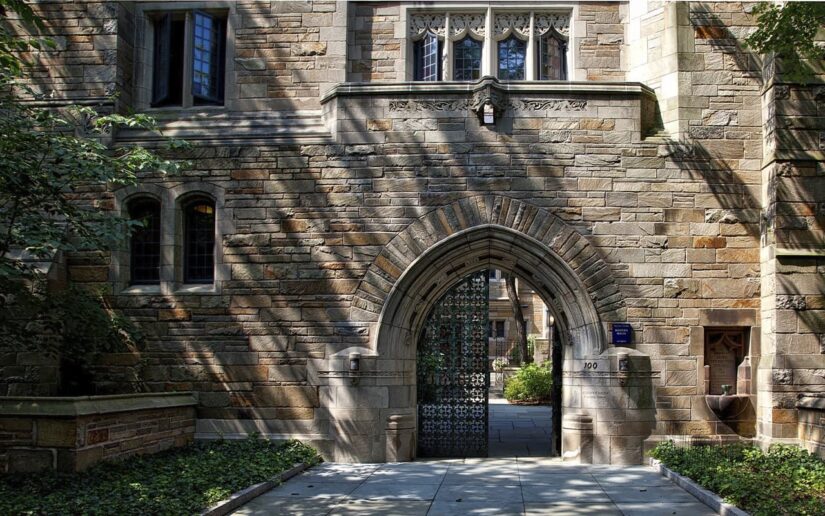
There’s Ralph Cioffi, pictured above, arrested last week and charged with insider trading, securities and wire fraud. A Bear, Stearns fund manager and proud 1978 graduate of St. Michael’s College in Vermont, he recently chaired the President’s Medallion Society for big donors, and served in the 1990s to “provide leadership” on the Board of Trustees on the Audit and Investment committees, the Burlington Free Press reported.
And Ignacio Pena, convicted of fraud in California for creating a shell company to provide over a million dollars’ worth of outsourced teaching, books, and sports programming to Compton College, where he served as trustee. A million bucks would have bought a lot of outsourced teaching, except Pena never delivered any.
Some of your trustees straddle multiple categories, like Peter Lewis, President and CEO of the Progressive auto insurance company, Princeton ‘55, and trustee of that institution. No question he’s an Insufferable Nabob, but he’s also a bit of an Ideological Nutter, bankrolling the movement to legalize medical marijuana (not recreational marijuana, just medicine for those who can afford the good scrips).
And like so many of us regular folks, his sincerely held values relentlessly led Lewis afoul of state power, as customs officers in New Zealand nabbed him in possession of more than quarter-pound of hash and quality doobage, not to mention “assorted smoking pipes and bongs.” That was in 2000, shortly after he made his first $50 million gift. To overcome his embarassment, he dropped another 60 mil on them the next year, and another $101 million in 2006. Now the entire campus is named after him.
And I laughed at all my Yale pals in the early 80s who, with cherubic sincerity over their bongs, kegs, and freemasonry, swore they were going into investment banking and white-shoe law firms in order to “fight the system from the inside.” None of those folks have delivered on their promise to build socialism while pulling in seven figures, but Lewis’s story gives one hope.
Good for you, trustee Lewis. They’re cheering you on in dorms, eating clubs and the crypts of secret societies up and down the Atlantic coast. You keep stickin’ it to the man like that and we’ll have a better world in our lifetime.
This one comes over Vinnie Tirelli’s indispensable ADJ-L discussion list, courtesy of active list member, AAUP past president Jane Buck.
Apparently concerned by the administration’s efforts to transfer students into a program staffed by non-union faculty, the leadership of a creative independent union, the Adjunct Faculty Association at Nassau Community College, began an investigation into whether the arrangement violated federal law, using retired FBI agents working as private investigators.
The retired agents visted NCC trustees at home on Long Island last week, including the chair of the board, Mary Adams and the vice chair, John LeBoutillier. According to a Newsday account of the affair, both Adams and LeBoutillier, a loudmouth right-wing pundit and former Republican Congressman, claimed to have felt “intimidated.”
“I said it is very improper,” LeBoutillier huffed, according to the Newsday report. And LeBoutillier knows something about proper interrogation techniques. In addition to his highly qualified contributions to higher education as an NCC trustee, LeBoutillier’s main off-campus passion is the Skyhook II Project, “dedicated to recovering living American POWs in Southeast Asia.”
His expertise about the Vietnam war came the hard way–dodging the verbal slings and arrows of campus liberals and radicals who opposed the war while he was a Harvard Young Republican in the early 1970s. Styling himself “The Boot,” he brags about having made his political career as a low-rent imitator of William F. Buckley–authoring Harvard Hates America and an equally cheesy political novel.
By way of a postscript: Like adjunct faculty unionism, sending detectives to the homes of trustees is an idea whose time has come. Indeed, it’s long overdue.
I have a proposal, Chronicle of Higher Ed or Inside Higher Ed–better yet, AFT or NEA. (I’d say AAUP, but we don’t have the cash!)
Hire a young, disaffected Ph.D. candidate. Give her a video camera. Tell her to watch Stephen Colbert’s interviews with the members of the U.S. Congress.
Then have her interview college trustees–just let them be themselves.
Many thanks for the suggestions on the Academic Labor Bookshelf. Later in the summer, I’ll reissue it, revised, expanded, and with commentary.
A couple of weeks back, I linked to a report by Phil Jack on AFT’s Face Talk about the case of Margaret West, a 20-year veteran part-timer at Edmonds Community College in Washington State, and the incoming president of its AFT union local, a mixed unit that bargains for faculty serving both tenurably and nontenurably. She has joined administrators to testify on behalf of education funding and led the faculty team in six bargaining negotiations.
Even though her performance had won her several guarantees of continuing employment under her AFT contract’s “Assurance of Employment” clause, the new dean of her college didn’t renew West’s contract when it came up, on the verge of her becoming the first faculty member serving part-time to helm the local. Asked why, the dean consulted his diploma from the Dick Cheney school of human relations, thrust out his lower lip, and shrugged.
“Because I can,” he said.
But maybe he can’t. As Jack explains in his follow-up, AFT Washington is slamming the administration with a publicity campaign, two grievances, an unfair labor practice charge, and a human-rights complaint on the grounds of age discrimination.
“All of this activity and attention has also resulted in several legislators and the Governor’s office beginning to look into the situation,” Jack says.
In my first post, I asked about the “Assurance of Employment” clause, and subsequently discussed it with the president of Washington AFT, Sandra Schroeder.
She explained that it is only a term-to-term guarantee for faculty serving part-time. “It only ‘assures’ employment for a year at a time,” she noted.
Schroeder called the bargaining climate in Washington–which legally limits the scope of bargaining to a cat-fight over the raise pool between institutions and bargaining units–”hellaciously hard,” especially at the two-year schools, “which are ground zero for the worst of the academic staffing crisis.”
“We would all say Edmonds ‘assurance’ needs to be strengthened,” she said, “but it is slow going.”
Despite its length, this “bookshelf” is quite selective and personal. I’ve left out many helpful individual texts, and entire categories of useful material, including histories of academic unionism, studies of comparable worth and gender inequity, the idea of the university discourse, together with studies of postmodernity, disciplinarity, and professionalism. I’ve also largely neglected the larger discourse of schooling, democracy, and assessment, with one or two exceptions. I didn’t mention Adolph Reed and the Labor Party’s crucial “Free Higher Education” platform. Nor have I included the long list of efforts that argue for “making peace with the marketplace,” such as those by Derek Bok and David Kirp, and I’ve also left out many of the the projects that study nontenurable employment from what I view as largely an administrative standpoint, as well as administrator self-adulation and the self-interested material produced by individuals profiting from contingency.
I have rather arbitrarily focused on books and online resources, and not made any attempt to select individual chapters or provide a list of relevant journal articles, which means, for instance, that I didn’t mention such indispensable essays as Andrew Ross’s definitive discussion of “The Mental Labor Problem” in Social Text, or the many essays appearing in minnesota review on the subject during the past two decades under Jeffrey Williams’ editorship. I also didn’t attempt to provide any of the incredibly helpful theorization of the general intellect by Italian autonomixt Marxists (the folks that brought you Empire, for instance.)
Nor did I delve into the literature of white-collar proletarianization that flows through C. Wright Mills and Harry Braverman to Aronowitz, whose first book has a brilliant chapter on the question.
Finally, many of the figures I have included have produced substantial, additional, relevant work well worth adding to your own lists. This includes such figures as Sheila Slaughter, Gary Rhoades, Henry Giroux, Stanley Aronowitz, Eileen Schell, Jennifer Washburn, Joe Berry, Michael Berube, and Cary Nelson. I’ve certainly overlooked a few things inadvertently as well, and am happy to update this list periodically based on feedback!
For those seeking more, there are a number of online bibliographies on such topics as contingent forms of employment. My favorites are Owen Thomas’s detailed-but-selective resource list for the Ohio Contract Faculty Association, Wayne Ross’s comprehensive aggregation at the Workplace blog, and two recent review-essays by Jeffrey Williams and Vincent Leitch. Both include detailed taxonomies:
Vincent Leitch, “Work Theory.” Critical Inquiry Winter 2005: 286-301
Jeffrey Williams, “The Post-Welfare State University.” American Literary History (ALH) 2006 18: 190-216
Academic labor as a system
Stanley Aronowitz, The Knowledge Factory: Dismantling the Corporate University and Creating True Higher Learning.
Marc Bousquet, How the University Works: Higher Education and the Low-Wage Nation.
Samuel Bowles and Herbert Gintis, Schooling in Capitalist America: Educational Reform and the Contradictions of Economic Life.
Henry Giroux and Susan Searls Giroux, Take Back Higher Education.
Randy Martin, ed., Chalk Lines: The Politics of Work in the Managed University.
Cary Nelson and Stephen Watt, Academic Keywords: A Devil’s Dictionary for Higher Education, and Office Hours: Activism and Change in the Academy. Also see: Cary Nelson, Manifesto of a Tenured Radical, Nelson & Berube, Higher Education Under Fire.
Gary Rhoades, Managed Professionals: Unionized Faculty and Restructuring Academic Labor.
Sheila Slaughter & Larry Leslie, Academic Capitalism
Sheila Slaughter and Gary Rhoades, Academic Capitalism and the New Economy: Markets, State, and Higher Education.
Contingent Faculty
Faculty serving contingently are the overwhelming majority of all faculty today. Contingency is the norm of faculty life, and organizing this sector is the cutting edge of academic labor issues right now. The best sources are contemporary and available online.
In addition to the reporting at The Chronicle of Higher Education and Inside Higher Education, see Workplace: A Journal for Academic Labor,COCAL, and join the ADJ-L discussion list hosted by Vinnie Tirelli. All three of the major higher-education unions — AAUP,AFT, and NEA — produce indispensable scholarship and policy papers on contingent academic labor. The testimony of faculty serving contingently is available at a growing number of locations in the blogosphere. Some of those sites are listed in my blogroll, and other stories are captured in the videos at my youtube channel.
Joe Berry, Reclaiming the Ivory Tower: Organizing Adjuncts to Change Higher Education
Joe Berry, Beverly Stewart and Helena Worthen, Access to Unemployment Benefits for Contingent Faculty: A manual for applicants and a strategy to gain full rights to benefits, published by Chicago COCAL (Coalition of Contingent Academic Labor), with financial assistance from AFT, AAUP, and NEA.
Michael Dubson, Ghosts in the Classroom: Stories of College Adjunct Faculty –and the Price We All Pay.
Nelson, Cary, ed., Will Teach for Food: Academic Labor in Crisis.
Eileen Schell, Gypsy Academics and Mother-Teachers: Gender, Contingent Labor, and Writing Instruction
Eileen Schell and Patrica Lambert Stock, eds., Moving a Mountain: Transforming the Role of Contingent Faculty in Composition Studies and Higher Education.
Barbara Wolf, Degrees of Shame (film) email her at: barbara@barbarawolf.com
Graduate Employee Unions
The most important source for graduate-employee labor news is the Coalition of Graduate Employee Unions (CGEU) email list and Web site, which links to most of the North American established unions and organizing campaigns.
Deborah M. Herman and Julie M. Schmid, Cogs in the Classroom Factory: The Changing Identity of Academic Labor (public institutions)
Monika Krause, Mary Nolan, Michael Palm, and Andrew Ross, The University Against Itself: The NYU Strike and the Future of the Academic Workplace
Benjamin Johnson, Patrick Kavanagh, and Kevin Mattson, eds., Steal This University: The Rise of the Corporate University and the Academic Labor Movement (mostly private institutions).
Theory and Practice of Higher-Ed Administration
The single most important thing you can do to educate yourself about the intentions of higher-education administration is to read the discourse of higher-ed administrators themselves. Their self-description of their aims is far scarier than anything I can tell you about them.
The best one-volume source for administrator-think is the Association for the Study of Higher Education (ASHE) Reader, Organization and Governance in Higher Education, edited by Christopher M. Brown. The 5th edition (2000) is available used. The 6th edition from Pearson Custom Publishing is promised for this year (2008), but is not currently available.
The best one-volume discussion of the role of management theory in U.S. intellectual life is the indispensable Thomas Frank: One Market Under God: Extreme Capitalism, Market Populism, and the End of Economic Democracy. For a contrasting view, see Christopher Newfield, Ivy and Industry: Business and the Making of the American University, 1880-1980.
Stanley Aronowitz, Against Schooling: For an Education that Matters.
Clyde Barrow, Universities and the Capitalist State: Corporate Liberalism and the Reconstruction of American Higher Education, 1894-1928.
Henry Giroux, The University in Chains: Confronting the Military-Industrial-Academic Complex. Also see: Theory and Resistance in Education and Aronowitz & Giroux, Education Still Under Seige..
Christopher Newfield, Unmaking the Public University: The Forty-Year Assault on the Middle Class.
David Noble, Digital Diploma Mills: The Automation of Higher Education.
Kenneth Saltman, Capitalizing on Disaster: Taking and Breaking Public Schools. Also see The Edison Schools: Corporate Schooling and the Assault on Public Education and (with David Gabbard), Education as Enforcement: The Militarization and Corporatization of Schools
Upton Sinclair, The Goose-Step.
Jennifer Washburn, University Inc.: The Corporate Corruption of Higher Education.
Geoffry White and Flannery Hauck, eds., Campus, Inc.: Corporate Power in the Ivory Tower
Theory, Disciplinarity & Social Logic of the University
Michael Berube, The Employment of English.
Frank Donoghue, The Last Professors.
David Downing, The Knowledge Contract: Politics and Paradigms in the Academic Workplace.
Richard Ohmann, Politics of Knowledge: The Commercialization of the University, the Professions, and Print Culture
Bill Readings, The University in Ruins.
Evan Watkins, Work Time: English Departments and the Circulation of Cultural Value.
Jeffrey Williams, ed., The Institution of Literature.
He just might get part-time teaching work at one of the several universities in the area, but there were no guarantees. He might well end up working at a grocery store, or a bar, or, if things went really badly, at a convenience store or fast food place. He shuddered, thinking of the injustice of one of the bright young minds in his field selling beer and cigarettes to the scum of the earth, or asking some imbecile if he wanted to super-size his order.
Raymond stared out the window of his office for a few minutes, morosely sipping his whiskey and imagining the very worst possible scenarios. When he turned back to his computer, he was surprised to find a job listing glowing on the screen with what seemed to be an unusual luminosity… read moreCourtesy of Sisyphus, by way of the redoubtable Craig Smith, of AFT’s FACE Talk.
Contrary to administrative propaganda (and the self-image of many faculty members), tenure-stream professors are not tweedy library mice or individualistic mavericks wildly hostile to collective endeavor.
In fact, by the calculation of the brilliant, indispensable Gary Rhoades (Managed Professionals and Academic Capitalism in the New Economy), nearly half of all faculty in the tenure stream bargain collectively–a rate more than 300% of typical U.S. workers. Graduate employees are close behind with, according to Gordon Lafer, a nearly 20% unionization rate. Both rates would be higher without the scandalous violation of international human rights represented by the laughable 5-4 Yeshiva decision and the Bush mob’s arrogant reversal of the NYU decision.
I’m reprinting the announcement below in its entirety from the Coalition of Graduate Employee Unions mailing list.
The 17th Annual CGEU conference will be held at Yale University in New Haven, CT on July 31 - Aug 3, 2008.
Please contact Mary Reynolds, UNITE HERE/GESO, for more information: mary@yaleunions.org or 203-500-4698.
Higher education is one of the fastest growing sectors of the U.S. economy. Despite the economic downturn, many university endowments are hitting record highs (at Yale, for example, the endowment topped $22 billion in 2007). Public and private universities are competing in a race to open campuses abroad and build partnerships with foreignuniversities, particularly in the Middle East and China. In the United States, campuses are expanding to attract a record number of potential undergraduates.
The CGEU and the academic labor movement can provide a model for how to combat the increasing corporatization and casualization in the academy. Graduate teachers and researchers have an opportunity to use the expansion in higher education and our contract negotiations or demands for recognition to increase the number of good, union faculty jobs on our campuses. We must create and strengthen coalitions with other workers and unions on our campuses and across the academy, develop legislative and bargaining strategies to protect and expand organizing rights for more workers, and build consensus that union growth and power is the most important issue facing all academic workers.
Workshops could include:
Privatization at Public Universities
University of Michigan Victory: A Case Study
Building Power: Union density and lining up our contracts
Coalition Building: How to build alliances with other workers on campus, academic and non-academic?
The Changing Face of Higher Ed: Casualization, Race, Gender, and LGBTQ concerns
University Growth, Faculty Shrinkage: Endowments, Development and the Restructuring of Academic Work
The Global University and organizing global scholars
The Local University and organizing within our local communities
Legal and legislative strategies: Teaching and Research Assistants Collective Bargaining Rights Act, Employee Free Choice Act
Bargaining Strategies: How can unions help universities help themselves? How to use grad research to improve health care, create
innovative job strategies, etc.?
Building organizing committees: High Turnover, the memory problem, and the union difference
So I learned that a good way to help your 3-month-old with his first flight is to pretend that takeoffs and landings are your favorite things in the world. Even when they’re not. I also suspect that loudly pretending that you are having a great time with takeoff and landing is just as irritating to other passengers as listening to your offspring cry. In any event, Emile laughed and chuckled his way into the air and back down to earth.
Thanks to Mark Bauerlein for starting a thread on academic labor, including a very kind mention of How The University Works and spurring me to deliver on my now-five-month-stale promise to post some thoughts on core academic-labor readings — an Academic Labor Bookshelf. I’ll make that a two-parter and publish it this week.
For now, here are the details of academic labor’s most important conference, the Coaliton of Contingent Academic Labor event, held biennially. This year, COCAL VIII is organized by the indomitable Mary-Ellen Goodwin and will be hosted at San Diego State August 8-10, 2008.
The overwhelming majority of faculty serve contingently. Contingency is the norm of faculty employment in the United States.
I’ve long urged COCAL and CGEU (the Coalition of Graduate Employee Unions), which also organizes a summer conference, to meet jointly.
Together the folks attending these events comprehend the system of academic labor better than most of us writing about it.
COCAL was born out of activist events and a contingent-labor congress held conjointly with the 1996 Modern Language Association, and organized by, among others, a core group of CUNY adjunct activists and MLA Graduate Student Caucus agitators, including among many, many others, Eric Marshall, Vinny Tirelli, Vicky Smallman and yours truly. In the aftermath, at Stanley Aronowitz’s urging, I founded Workplace: A Journal for Academic Labor, and, like some of us, took a tenure-track job: with almost as many others, like AAUP’s Julie Schmid and Debby Herman, Eric and Vicky joined the labor movement.
In short, COCAL was born out of a collaboration between the major academic unions, faculty serving contingently, and graduate-employee activists. IMHO, that collaboration is not only the future of the organization; it’s the future of the academy.
Loyal readers will have seen some of this before, but I’ve just cross-posted this to the Chronicle of Higher Ed Brainstorm and The Valve. NYU has made a pdf of the entire chapter available for free download: it’s written for general readership and is suitable for undergraduate reading. Ask your students about their working lives–you’ll be shocked at what they endure.
Not that most of you will care very much, but one of the best contenders for the thoroughbred Triple Crown will race this Saturday. The horse’s moniker, “Big Brown,” expresses the owner’s gratitude to shipping giant UPS for renewing a contract with his trucking company. For folks like him, for full-time Teamster drivers, and for the customers who want their online-ordered crap at their doors tomorrow, UPS represents a good deal. The company’s also received plenty of good ink for its “Earn and Learn” financial-aid packages for part-time student employees.
Coincidentally, the chapter of HTUW that usually gets the most attention from non-academic readers is the one questioning whether involvement with the company really has been a good deal for the tens of thousands of students it claims to have “aided” over the past decade.
Most startling for many readers are the details of the meretricious financial aid scheme at its Louisville Worldport hub. Recruited from Appalachia, urban Louisville and Cincinnati, and the profoundly depressed rural Kentucky counties where blood and animal excrement from giant hog butcheries and chicken plants befoul the waterways, students flock to the UPS program on the promise of “education benefits” that few persist to receive.
The worst job–performed by thousands of struggling students–is a physically demanding, high-stress job sorting heavy packages on a fast conveyor at the airport hub. Every student must work after midnight five nights a week–every Monday through Friday) but on a split shift, working just a few hours (until 3 or 4 am) at unprecendentedly low pay, taking home about $25 a shift. The Teamsters play a role in this scheme–they’ve bargained this low pay for the students and part-timers while preserving the generous pay and benefits of the full-time labor aristocrats represented by the drivers: driving for Big Brown is still one of the good blue-collar jobs. (This is similar to the strategy of many faculty unions, who bargain great deals for the minority tenurable caste while neglecting the contingent majority.)
Few of the students in this program were succesfully taking even one class a term when I spoke to its director. While UPS refuses to make meaningful persistence data available, the most generous interpretation of the numbers suggests a persistence to degree while involved in the program of around 12%.
…..
In its ruthless quest for super-cheap labor, the university has fastened on new ways of exploiting an old favorite: the student worker. We are all familiar with the figure of a student working a minimum-wage job as “financial aid.” On many campuses, student workers outnumber faculty, staff, and other workers combined.
Undergraduates work for their degree-granting institution as painters, maids, janitors, cooks, groundskeepers, truck loaders, daycare staff, teaching assistants, computer technicians, coaches, security guards, and administrative assistants, typically for wages at or near the national or local minimums. For a significant fraction of these students, on-campus jobs are just one element of their efforts to fund their degrees, which increasingly involve unsustainable debt loads and additional off-campus employment.
Nearly twenty million students are enrolled in postsecondary institutions. Eighty percent work to finance their educations, averaging 30 hours a week.
I first started thinking about this issue at the University of Louisville, where I first received tenure. I arrived in 1998, shortly after the university began a much-ballyhooed “partnership” with United Parcel Service (UPS), the city of Louisville, and other local colleges. The partnership’s sole function is to entice students to sign contracts committing them to provide cheap labor in exchange for education benefits. This arrangement alone has provided UPS with more than ten thousand ultra-low-cost student workers since 1997, the same year that the Teamsters launched a crippling strike against the carrier. Currently there are six thousand undergraduates working at the UPS Louisville hub, with plans to hire thousands more. About three thousand work a midnight shift that ends at UPS’s convenience—typically 3 or 4 a.m., later during peak shipping seasons.
Between 1997 and 2003, UPS hired undergraduates to staff more than half of its one hundred and thirty thousand part-time positions. Students are currently the majority of all part-timers, though only some receive education benefits. By restricting the education benefits of its “Earn and Learn” programs to students willing to work undesirable hours, UPS has over the past decade recruited approximately fifty thousand part-time workers to its least desirable shifts without raising pay. The largest benefits are reserved for students who think they can handle working after midnight every night of the school week.
The consequences of night work are well documented, and the available evidence suggests markedly negative effects for the Louisville students. Every instructor to whom I spoke reported excessive fatigue and absenteeism (due to both fatigue and an extraordinarily high injury rate). Students participating in the UPS program showed substantial failure to persist academically. In a desperate attempt to stem this tide, faculty scheduled UPS-only sections between 5 and 11 p.m. both on campus and at the hub. They even began a ritual of 3 a.m. advising, sending as many as a dozen faculty out to the airport before dawn in order to catch the exhausted students coming off the sort. Since nearly all of the faculty involved taught and served on committees five days a week, these efforts resulted in a bizarre twenty-four-hour cycle of work for themselves.
The UPS partnership appears to have increased rather than decreased the economic distress of participants. According to the company’s own fact sheet, student workers giving up five nights’ sleep will typically be paid for just fifteen to twenty hours a week. Since the wage ranges from just $8.50 to $9.50, this can mean net pay below $100 a week, and averaging a little over $120. The rate of pay bears emphasizing: because the students must report five nights a week and are commonly let go after just three hours, their take-home pay for sleep deprivation and physically hazardous toil will generally be less than $25 per shift. In fact, most UPS part-timers earn little more than $6,000 in a year, and most have at least one other job.
UPS presents a triple threat to students’ prospects for academic persistence: sleep deprivation and family-unfriendly scheduling, low compensation resulting in secondary and tertiary part-time employment, and a high injury rate. UPS refuses to provide meaningful persistence figures for the more than fifty thousand students it has “aided” over the past decade. But of the ten thousand at the Louisville hub, it could account for little more than three hundred bachelor’s or associate’s degrees earned. The most generous interpretation of the few statistics made available suggests persistence to degree of about 12 percent.
According to one analyst, in 1964, all of the expenses associated with a public university education, including food, clothing and housing could be had by working a minimum wage job an average of 22 hours a week throughout the year. (This might mean working 15 hours a week while studying and 40 hours a week summers.) Today, the same expenses in a low wage job require 55 hours a week 52 weeks a year.
At a private university, those figures in 1964 were 36 minimum wage hours/week, relatively manageable for a married couple or a family of modest means, and still quite manageable for a single person working the lowest possible wage 20 hours a week during the school year and some overtime on the vacations. Today, it would cost 136 hours per week 52 weeks a year to “work your way through” a private university.
Now each year of private education amounts to the annual after-tax earnings of nearly four lowest-wage workers working overtime.
Employing misleading accounting that separates budgets for building, fixed capital expenses, sports programs and the like from “instructional unit” budgets, higher education administration often suggests that faculty wages are the cause of rising tuition, rather than irresponsible investment in technology, failed commercial ventures, lavish new buildings, corporate welfare, and so on. The plain fact is that many college administrations are on fixed-capital spending sprees with dollars squeezed from cheap faculty and student labor: over the past thirty years, the price of student and faculty labor has been driven downward massively at exactly the same time costs have soared.
For the eighty percent of students trying to work their way through, higher education and its promise of a future is increasingly a form of indenture, involving some combination of debt, overwork, and underinsurance. It means the pervasive shortchanging of health, family obligations, and ironically, the curtailment even of learning and self-culture. More and more students are reaching the limits of endurance with the work that they do while enrolled. One major consequence of this shift of the costs of education away from society to students, including especially the costs of education as direct training for the workforce, is a regime of indebtedness, producing what Randy Martin describes as docile financialized subjectivities by way of what Jeff Williams has dubbed “the pedagogy of debt.” The horizon of the work regime fully contains the possibilities of student ambition and activity, including the conception of the future.
Last week I posted on the scary case of Juan Hong, a tenured full professor at UC Irvine, who was retaliated against for his speech in connection with his governance duties. Because he dissented from the majority on a couple of personnel decisions, and expressed concern about the impact of nontenurable hiring on undergraduate learning, he attracted the ire of administrators and was denied a merit raise and assigned additional work. He has since retired, but is appealing his case, which has truly chilling implications for the rest of us: if you don’t have speech protections when engaging in governance, where do you have it? And how meaningful can “shared” governance be if you can be hounded off the campus for disagreeing with the administration?
Of course Bob Dole’s ranting response to Scott McClellan’s memoir of his years in the Bush mob makes it clear that real men don’t need no stinking academic freedom.
“There are miserable creatures like you in every administration who don’t have the guts to speak up or quit if there are disagreements with the boss or colleagues,” Dole opined, “because if all these awful things were happening, and perhaps some may have been, you should have spoken up publicly like a man, or quit your cushy, high-profile job.”
Thanks to the U.S. Supreme Court’s decision in the Garcetti case, however, even the most obscure civil servant who “has the guts to speak up” had better be prepared to be demoted, disgraced, or terminated for disagreeing with the political hacks appointed to be her boss. Thanks to Garcetti, in a way Dole’s right: “speaking up” for civil servants has become a test of courage in a way that we haven’t seen for many years.
Most recent academic freedom cases are tests of the tension between the philosophically tenuous but nonetheless steadily more concrete claim of administrations to “institutional academic freedom” (construed as freedom from judicial intervention) and the actual speech rights of individuals. Increasing “freedom” for institutions often means greater encroachments on the faculty.
The Hong case seeks to give “institutional academic freedom” the cover of Garcetti, at least for public institutions. Regarding this strategy, however, Wilson snorted with derision via email: “First, Garcetti v. Ceballos was wrongly decided by the Supreme Court, and wrongly applied here to academic speech. [Clearly] when faculty are performing their official duties, academic freedom protects them from being fired for expressing controversial views.”
Referencing what he described as the equally flawed Parate v. Isibor, he noted that “It clearly stands for the right to express a viewpoint. The administration can overrule a professor’s grade under the ruling, but it can’t fire a professor for expressing a certain viewpoint.”
But while UC-Irvine didn’t fire Hong, it did retaliate, and the Ninth District upheld that retaliation under the Garcetti standard. So unless Hong v. Grant is overturned on appeal, you better get ready to live in Bob Dole’s world. Kinda like playing Gary Cooper’s role in High Noon.
My department just circulated its annual call for summer reading suggestions. I have long promised an “academic labor bookshelf” series of entries, and will probably deliver on that in a few weeks.